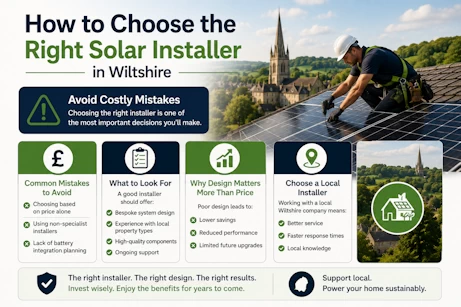
Choosing the right solar installer in Wiltshire makes the difference between a system that delivers decades of reliable performance and one that underperforms, requires expensive repairs or limits your future options. Look for an installer who offers bespoke system design tailored to your property, demonstrates experience with local building types, and provides integrated solutions that include battery storage planning and ongoing support.
Avoid Costly Mistakes
Choosing the right installer is one of the most important decisions you’ll make when investing in solar energy for your home. A quality solar panel installation in Wiltshire requires careful planning, professional design work and skilled installation that accounts for your property’s unique characteristics.
The solar installation market includes companies ranging from highly skilled specialists to general contractors who install solar panels as an occasional sideline. The installer you choose will determine not only how well your system performs initially, but how reliable and upgradeable it remains for the next two to three decades.
Common Mistakes to Avoid
The most frequent error homeowners make is choosing based on price alone. The cheapest quote may use lower-quality components, skip essential design steps or employ less experienced installers. These savings often prove false economy when systems underperform, components fail prematurely or future upgrades become difficult or impossible.
Using non-specialist installers represents another significant risk. Solar installation requires specific expertise in electrical systems, roof mounting, inverter sizing and system design. A general electrical contractor may lack the knowledge to optimise panel orientation, account for shading patterns throughout the year or properly integrate battery storage into the system design.
Lack of battery integration planning is perhaps the most overlooked mistake. Even if you choose not to install battery storage immediately, your system should be designed to accommodate it in future. Installers who fail to plan for this possibility may install inverters or configure systems that make adding batteries later expensive or impractical.
What to Look For in a Wiltshire Solar Installer
Bespoke System Design
A good installer should offer a bespoke system design rather than a one-size-fits-all approach. Every property in Wiltshire differs in roof orientation, pitch, shading, available space and household energy consumption patterns. Your installer should conduct a thorough site survey, analyse your electricity usage and design a system specifically matched to your requirements.
The design process should include detailed roof measurements, shading analysis at different times of day and year, assessment of your electrical infrastructure and calculation of the optimal panel quantity and positioning. Installers who quote over the phone or from satellite images alone cannot provide the precision needed for optimal performance.
Experience with Local Property Types
Wiltshire properties range from modern new builds to listed Georgian townhouses and centuries-old cottages with complex roof structures. An installer with genuine local experience understands the challenges of working with traditional building materials, navigating planning considerations for properties in conservation areas and adapting installations to the vernacular architecture common throughout the county.
Ask potential installers about their experience with properties similar to yours. How do they handle installations on older roofs? What mounting systems do they use for different roof materials? How do they manage cable routing in period properties whilst maintaining aesthetic standards?
High-Quality Components
The components your installer specifies will determine your system’s performance, longevity and reliability. Quality solar panels, inverters and mounting systems cost more initially but deliver better returns through higher efficiency, longer operational life and more comprehensive warranties.
Ask which panel manufacturers the installer works with and why. A quality installer should explain the differences between component options and recommend specific products based on your circumstances rather than simply offering whatever brand provides the highest margin. When comparing quotes, ensure you understand exactly which components each installer proposes and research their specifications and reputation independently.
Ongoing Support and Maintenance
Solar systems require minimal maintenance but benefit from periodic professional inspection and cleaning. Your installer should offer ongoing support, including system monitoring, performance troubleshooting and maintenance services. Companies that disappear after installation leave you without recourse if problems develop or you need advice about system expansion.
Clarify what post-installation support the installer provides. Will they monitor system performance remotely? How quickly do they respond to service calls? Do they offer maintenance packages? What happens if components need repair or replacement?
Why Design Matters More Than Price
Poor design leads to lower savings, reduced performance and limited future upgrades. Even high-quality components underperform when the system design fails to account for shading, uses incorrect inverter sizing or positions panels at suboptimal angles.
System Sizing and Household Consumption
Proper system design matches panel capacity to your energy consumption patterns. An oversized system may produce excess electricity that you cannot use or store, whilst an undersized system fails to maximise your potential savings. The right installer analyses your actual consumption data and designs a system that aligns generation with your usage.
For most Wiltshire households, this means considering not just current electricity use but likely future increases. If you plan to install an electric vehicle charger, replace a gas boiler with a heat pump or expect household size to change, these factors should inform the system design from the outset.
Inverter Selection and Placement
The inverter converts direct current from your solar panels into alternating current your home can use. Inverter selection affects system efficiency, monitoring capabilities and battery compatibility. A quality installer chooses inverter capacity based on precise calculations rather than rules of thumb, considers future expansion possibilities and positions the unit for optimal performance and convenient access.
Hybrid inverters that support battery storage cost more initially but provide flexibility to add batteries later without replacing equipment. If your installer recommends a string inverter rather than a hybrid model, ensure you understand the implications for future battery integration.
Roof Mounting and Weatherproofing
The mounting system must secure panels safely for decades whilst maintaining your roof’s weatherproofing integrity. Different roof materials, pitches and ages require different mounting approaches. An experienced installer selects appropriate mounting hardware, installs it correctly and ensures all roof penetrations are properly sealed and flashed.
Rushed or inexperienced installation can lead to leaks, structural issues or poor panel alignment that reduces generation. These problems may not become apparent immediately but create significant costs later.
The Value of Local Installers
Working with a local Wiltshire company provides several practical advantages over national firms or installers based outside the region.
Better service comes from companies with local reputations to maintain and established relationships with suppliers, building control officers and other professionals in the area. Local installers depend on word-of-mouth recommendations and repeat business, creating strong incentives to deliver quality work and responsive service.
Faster response times matter when you need service, advice or troubleshooting. A company based in Wiltshire can visit your property quickly rather than scheduling visits around infrequent trips to the area. This responsiveness proves particularly valuable if issues develop during installation or in the early operational period.
Local knowledge encompasses understanding of regional weather patterns, familiarity with common building types and construction methods, awareness of local planning considerations and established relationships with relevant authorities. These factors contribute to smoother projects and better-optimised system designs.
Questions to Ask Potential Installers
When evaluating installers, ask specific questions that reveal their expertise, approach and reliability:
Can you show me examples of installations on properties similar to mine? Viewing completed projects similar to your property helps you assess the installer’s capabilities and see how finished systems look.
How do you conduct site surveys and design systems? A detailed answer covering shading analysis, consumption assessment and design software indicates a thorough approach. Vague responses suggest a less rigorous process.
What happens if I want to add battery storage in future? The installer should explain how their proposed system accommodates battery integration and whether any additional equipment or modifications would be required.
Which components do you recommend and why? The installer should discuss specific panel models, inverter options and mounting systems with clear rationale for their recommendations rather than generic answers.
What monitoring and support do you provide after installation? Understand what ongoing relationship you’ll have with the installer once the system is operational.
Understanding the Installation Process
A professional installation typically progresses through several distinct stages. Initial consultation involves discussing your requirements, energy usage and property characteristics. The site survey follows, during which the installer assesses your roof, electrical infrastructure and any site-specific considerations.
System design and quotation comes next. Your installer should provide detailed proposals showing panel layout, equipment specifications, expected generation and system cost. Take time to review these documents carefully and ask questions about anything unclear.
Once you accept the proposal, the installer handles necessary permissions and notifications. Most domestic solar installations fall under permitted development, but some properties require planning permission. Your installer manages building control notification and, once the system is operational, registration with the Distribution Network Operator.
The installation itself typically takes one to two days for straightforward residential systems. This includes mounting panels, installing the inverter and associated electrical equipment, and connecting everything safely. After installation, the system undergoes testing and commissioning before handover and demonstration of monitoring equipment.
Understanding this process helps you evaluate whether potential installers are following professional practices or cutting corners.
Integration with Battery Storage and Electric Vehicle Charging
Modern solar installations work best as part of integrated energy systems rather than standalone panels. Solar panels and battery storage enable you to store excess generation for use during evenings and periods of high demand, significantly increasing the proportion of your electricity that comes from your own solar system.
Similarly, electric vehicle charging integrated with solar generation allows you to power your car with renewable energy generated on your own roof. The right installer designs these integrations from the beginning, ensuring inverter capacity, electrical infrastructure and control systems can accommodate these technologies.
Even if you choose not to install batteries or EV charging immediately, selecting an installer who understands these integrations ensures your system is ready when you decide to expand. This forward planning can save substantial costs compared to retrofitting these capabilities later.
Why Oakford Integration
Oakford Integration designs and installs solar panel systems tailored to Wiltshire properties, with particular focus on integrating renewable energy with battery storage, electric vehicle charging and smart home technologies. Based in Potterne and operating throughout Wiltshire and surrounding counties, the company brings together electrical expertise, renewable energy knowledge and smart technology integration under a single point of responsibility.
Rather than offering solar panels as an isolated product, Oakford Integration considers your whole property energy system, designing solutions that work seamlessly with your existing electrical infrastructure and future technology plans. The company provides consultation, design, installation and ongoing support for residential customers seeking reliable, future-ready solar solutions.
Frequently Asked Questions
What qualifications should my solar installer have?
Professional solar installers should hold relevant electrical qualifications and ideally specific training in solar installation and system design. Ask potential installers about their team’s qualifications and experience. Quality installers will readily discuss their credentials and explain their approach to ensuring safe, compliant installations.
How long does solar panel installation take?
Most residential solar installations take one to two days for the physical installation work, though the complete process from initial consultation to final commissioning typically spans several weeks. This timeline includes survey and design work, equipment procurement, any necessary permissions, the installation itself and final testing and commissioning.
Should I wait until battery storage becomes cheaper?
Waiting for battery prices to decrease might seem logical, but choosing an installer who designs for future battery integration means you can benefit from solar generation immediately whilst retaining the option to add storage later. The key is ensuring your system is designed to accommodate batteries rather than requiring expensive modifications when you’re ready to expand.
Can solar panels be installed on any roof?
Most roofs can accommodate solar panels, though some present more challenges than others. Orientation, pitch, shading, structural capacity and roof material all influence feasibility and system design. A professional installer assesses these factors during the site survey and recommends the optimal approach for your specific property.
What happens if I have problems with my solar system after installation?
This depends entirely on your installer’s support arrangements. Before committing, clarify what post-installation support is provided, how quickly the installer responds to service requests and what monitoring capabilities exist to identify performance issues. Local installers typically provide faster response times and more accessible ongoing support than national firms or distant contractors.
Get Expert Solar Installation Advice for Your Wiltshire Property
Oakford Integration provides free consultations for homeowners considering solar panels and battery storage. The company’s engineers assess your property, discuss your energy requirements and design systems tailored to your specific needs and goals.
For honest advice about solar installation in Wiltshire, contact Oakford Integration on 01380 530500 or email hello@oakfordintegration.co.uk.